
Looking for the best things to do in Sitges? From Mediterranean beaches and beautiful modernist architecture to art, local food, coastal walks and a famously welcoming LGBTQ+ atmosphere, Sitges offers far more than a day beside the sea.
For gay men travelling from the US, UK, the Netherlands, Belgium, Italy, France, the Nordic countries and Spain, Sitges has an especially appealing combination: it is relaxed and sophisticated, lively without feeling overwhelming, and open-minded without making LGBTQ+ life feel like a separate part of the town. The result is a destination where you can spend the morning swimming, the afternoon exploring museums and the evening moving effortlessly between tapas bars, terraces and the town’s legendary nightlife.
Sitges is also wonderfully compact. Many of its highlights can be discovered on foot, while the surrounding Garraf landscape and Penedès wine country make rewarding excursions when you want to explore beyond the centre. Here are some of the best ways to experience it.
Relax on the best beaches in Sitges
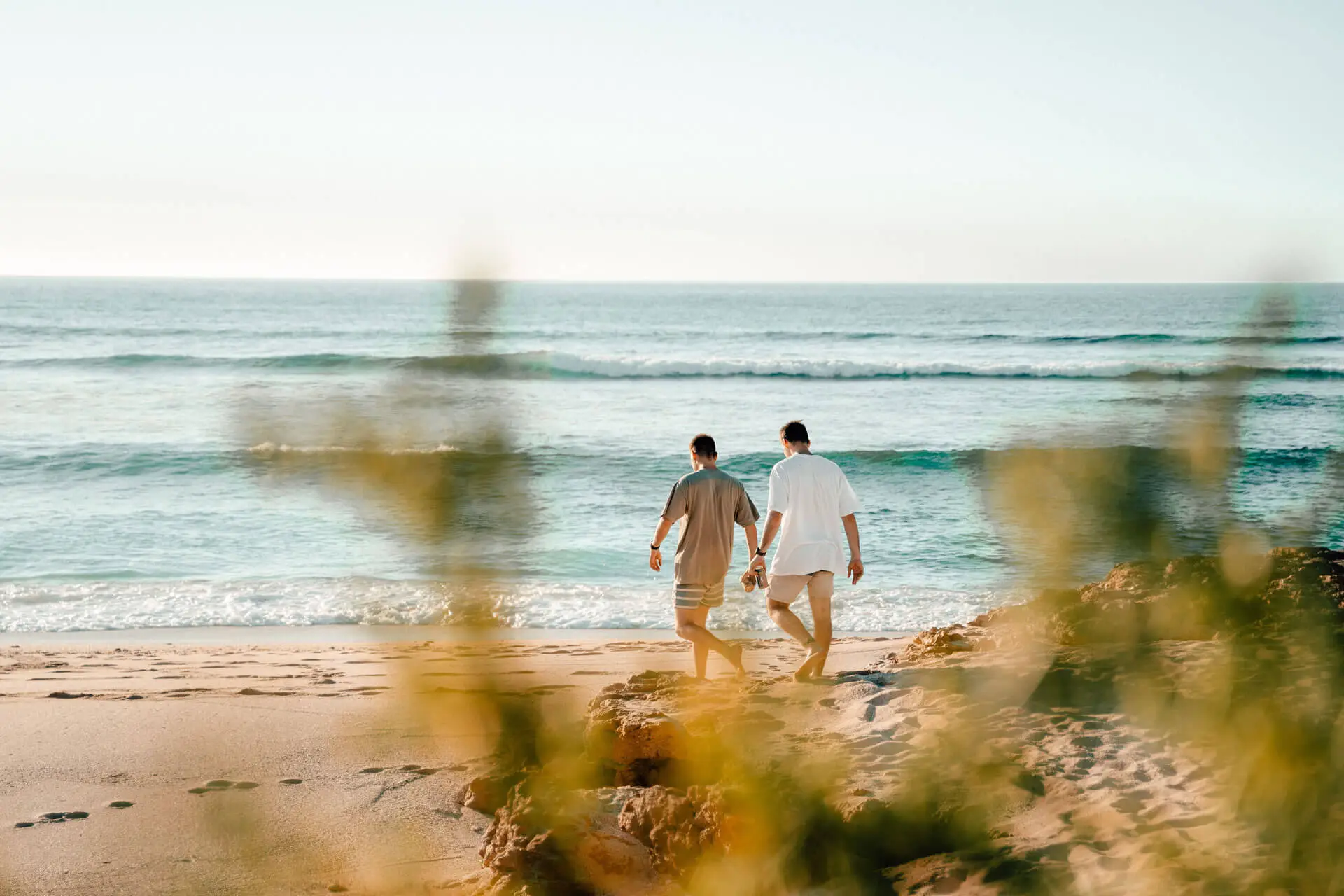
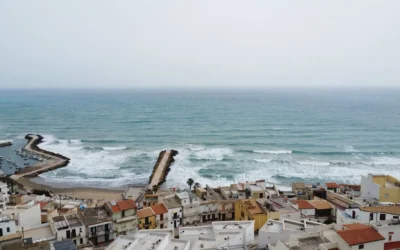
The beaches in Sitges are the natural starting point for discovering the town. There are numerous beaches and coves along the coastline, ranging from lively urban stretches in the centre to quieter and more natural spots further away.
For gay travellers, Bassa Rodona is the best-known LGBTQ+-oriented beach in the centre, while Balmins and Cala de l’Home Mort are particularly associated with the LGBTQ+ and naturist communities. But you do not need to choose a specifically gay beach to enjoy the coastline. Sitges is an open and welcoming destination, and the different beaches each have their own personality.
Start with a walk along the Passeig Marítim, the seafront promenade that connects much of the central coastline. Stop for a swim at La Ribera or La Fragata, continue towards Sant Sebastià, or head further towards Terramar if you prefer a quieter atmosphere.
For something more natural, explore the coves around the Garraf coastline. Cala Morisca, Desenrocada and Cala de l’Home Mort offer a stronger sense of escape, although access can be more demanding than at the central beaches.
The best approach is to avoid thinking of the beaches as a checklist. Pick one that suits your mood, swim, walk, stop for a drink and see where the day takes you.
Explore Sitges Old Town and its remarkable architecture
One of the most rewarding things to do in Sitges is simply to walk.
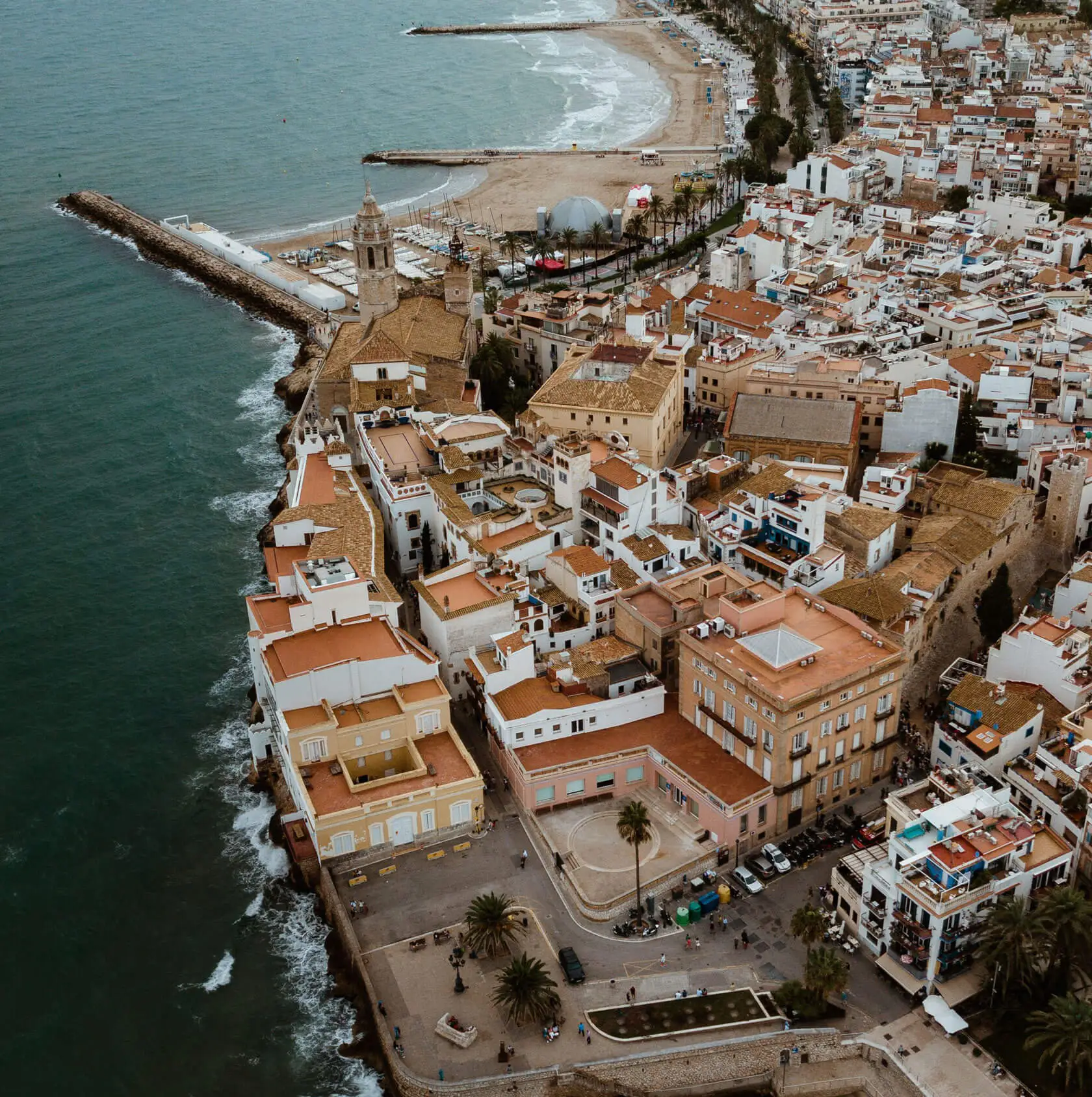
The old town is compact enough to explore without a strict itinerary, and its streets reveal layers of Sitges history, from its origins as a fishing village to the period when returning Catalan merchants and artists transformed the town.
Begin around Plaça de l’Ajuntament and wander towards the sea. Along the way, look for the distinctive houses associated with Sitges’ Americanos — local residents who made fortunes overseas and returned with new ideas, architecture and a cosmopolitan outlook. The town’s heritage includes Catalan Art Nouveau, Neoclassical, Eclectic and Noucentista influences.
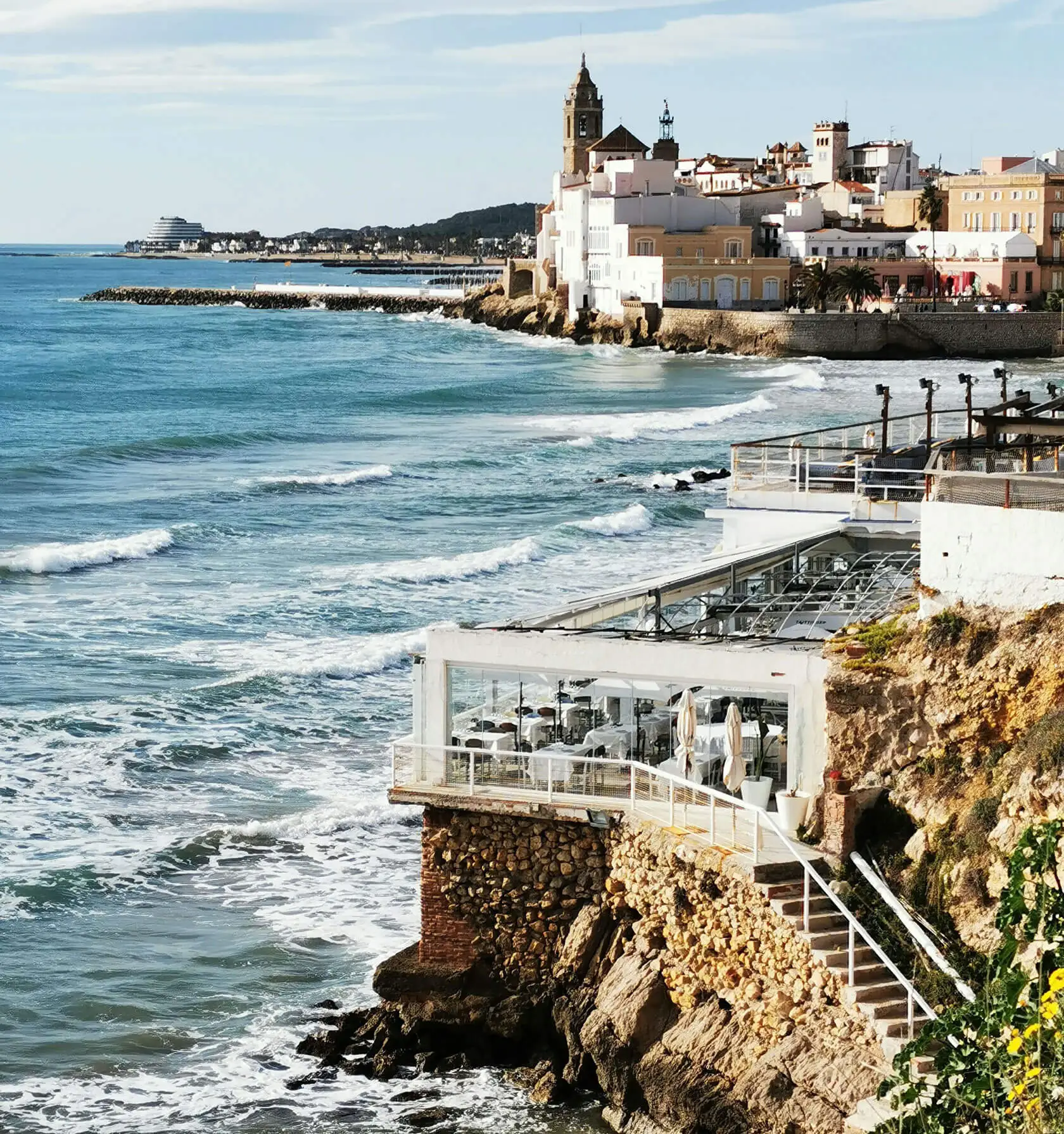
Then walk towards La Punta, where the Church of Sant Bartomeu i Santa Tecla rises dramatically above the Mediterranean. The view from the surrounding promenade is one of the most recognisable images of Sitges.
From here, continue towards Racó de la Calma, one of the most atmospheric corners of the old town. This narrow stretch beside the sea brings together some of Sitges’ most important cultural landmarks, including the Cau Ferrat and Maricel.
You do not need to be an architecture enthusiast to enjoy this part of town. The pleasure is in the details: colourful façades, wrought-iron balconies, small courtyards, old fishermen’s houses and unexpected views of the sea.
It is also a wonderful area for photography, particularly when the afternoon light begins to soften the white façades.
Discover Sitges’ museums, art and creative heritage
Sitges has an unusually rich artistic history for a Mediterranean town of its size.
The story is closely connected with Santiago Rusiñol, the Catalan artist and writer who settled in Sitges and helped establish the town as a meeting point for artists and intellectuals associated with Catalan Modernisme.
The Cau Ferrat Museum, Rusiñol’s former home and studio, is one of the essential cultural stops. Opposite it, the Maricel Museum occupies part of the spectacular Maricel complex, which was developed by the American collector Charles Deering with architect and artist Miquel Utrillo.
The Maricel Palace is another architectural highlight, with richly decorated interiors and terraces overlooking the Mediterranean. Availability for visits can vary, so it is worth checking access before planning your visit.
For a different glimpse into local history, visit the Romantic Museum, Can Llopis. The house provides an insight into the world of the 19th-century Sitges bourgeoisie and the period when overseas trade played an important role in the town’s development.
For gay travellers, the appeal of Sitges’ cultural scene is that it is not simply an addition to the LGBTQ+ experience. Art, architecture and openness have been part of the town’s identity for generations.
Enjoy Sitges through food, wine and the Mediterranean lifestyle
Some of the best experiences in Sitges are wonderfully uncomplicated: a long lunch, a glass of local wine, tapas shared between friends or an evening drink overlooking the sea.
Food and wine in Sitges reflect the town’s Catalan identity and its position between the Mediterranean coast and the vineyards of the Penedès. Local specialities include xató, a traditional salad made with curly endive, cod, tuna, anchovies and olives, served with a romesco-style sauce. Other local dishes include fideuà and seafood-based recipes.
Wine lovers should look beyond the town itself. Sitges is close to the Penedès wine region, making it an excellent base for vineyard visits and wine tourism. The area is particularly associated with Cava and other wines produced in the surrounding countryside.
Closer to home, the Malvasia de Sitges tradition provides another fascinating connection between the town and wine. The local tourism guide recommends visiting the Malvasia Interpretation Centre to learn more about this historic wine.
And then there is the simple pleasure of sitting outside.
Find a terrace in the old town, order something cold, watch people pass and allow yourself to slow down. Sitges rewards travellers who leave a little space in their itinerary.
For gay men, that relaxed social atmosphere is part of the attraction. A coffee can become lunch, lunch can become drinks, and drinks can eventually lead into the evening.
Experience the LGBTQ+ side of Sitges
For many gay travellers, exploring the gay side of Sitges is naturally one of the highlights of the trip.
Sitges has a long-established reputation as an LGBTQ+-friendly destination, with gay-friendly accommodation, restaurants, shops, beaches, bars and nightlife. The town’s tourism organisations describe its culture as welcoming and diverse, with LGBTQ+ visitors forming an important part of its international identity.
But the best way to experience gay Sitges is not necessarily to spend the entire day in one part of town.
Start at the beach, walk through the old quarter, stop for lunch and return towards the centre as the streets become more animated. The area around Carrer del Primer de Maig, commonly known as Carrer del Pecat, is at the heart of Sitges’ famous nightlife and social scene.
There are bars and terraces for different moods, from relaxed drinks and people-watching to later-night dancing.
What makes Sitges particularly enjoyable is the ease with which the LGBTQ+ scene blends into everyday life. You can spend the day visiting museums or walking along the coast and then move naturally into the gay social scene without feeling that you have entered a completely different destination.
That balance is one of the reasons Sitges continues to appeal to gay men from across Europe and further afield.
Get outside: Garraf, coastal walks and day trips
One of the most overlooked things to do near Sitges is to explore the landscape surrounding the town.
Sitges sits between the Mediterranean and the Garraf Massif, creating an unusual combination of coastline, rocky hills, vineyards and protected natural landscapes. The wider Garraf region offers hiking, cycling, water activities, wine tourism and gastronomic experiences.
For walkers, there are routes through the Garraf Natural Park, including trails connecting the coastal and inland landscapes. Even a shorter walk can give you a completely different perspective on Sitges.
A trip to nearby Garraf village is another worthwhile option. Its small beach is famous for its distinctive row of colourful fishermen’s huts, while the village’s architectural heritage includes the historic Celler de Garraf, associated with Antoni Gaudí and Francesc Berenguer.
For wine lovers, continue inland towards the Penedès, where vineyards, wineries and small villages create an ideal setting for a leisurely day outside Sitges.
This is where staying near Sitges can be particularly rewarding. Casa Brisa, a gay men-only boutique guesthouse near Sitges, provides a peaceful base for combining time in town with the beaches, Garraf countryside and Penedès wine region.
How to spend your time in Sitges
The beauty of Sitges is that you do not need to choose between culture, beaches, food, nature and LGBTQ+ life.
For a first visit, start with the promenade and a central beach, then explore the old town and the church of Sant Bartomeu i Santa Tecla. Continue towards Racó de la Calma and visit one of the museums before settling down for lunch.
For a more relaxed day, spend the morning by the sea, enjoy a long lunch and leave the afternoon deliberately unplanned. Wander through the old town, browse the independent shops and stop whenever somewhere catches your eye.
For a culture-focused day, concentrate on the Cau Ferrat, Maricel and Romantic Museum, combined with an architectural walk through the old quarter.
For a nature escape, head towards the Garraf Natural Park or explore one of the more secluded beaches and coastal paths.
And for a gay Sitges experience, combine the beach, old town, dinner and the LGBTQ+ bars rather than treating them as separate activities.
The best thing to do in Sitges may ultimately be to do slightly less. Leave room for spontaneous discoveries, long lunches and conversations that last longer than expected.
Frequently Asked Questions About Things to Do in Sitges
What are the best things to do in Sitges?
Is Sitges good for gay travellers?
How many days do you need in Sitges?
What can you do in Sitges besides going to the beach?
Is Sitges walkable?
What is there to do near Sitges?
The Garraf region offers hiking, cycling, beaches, coastal villages, water activities, gastronomy and wine tourism. The Penedès wine region is also within easy reach for a day trip.
Discover more of Sitges
There is a reason people return: the town makes it remarkably easy to combine Mediterranean beach life, culture, nature, gastronomy and LGBTQ+ freedom in a single day.
Ready to explore more? Visit our Things to Do guide for our recommendations on beaches, nature, culture, food, wine and experiences in Sitges and the Garraf region.

0 Comments